Ship Python Scrapers Faster With Proxies, Rotation, and MaskLabs
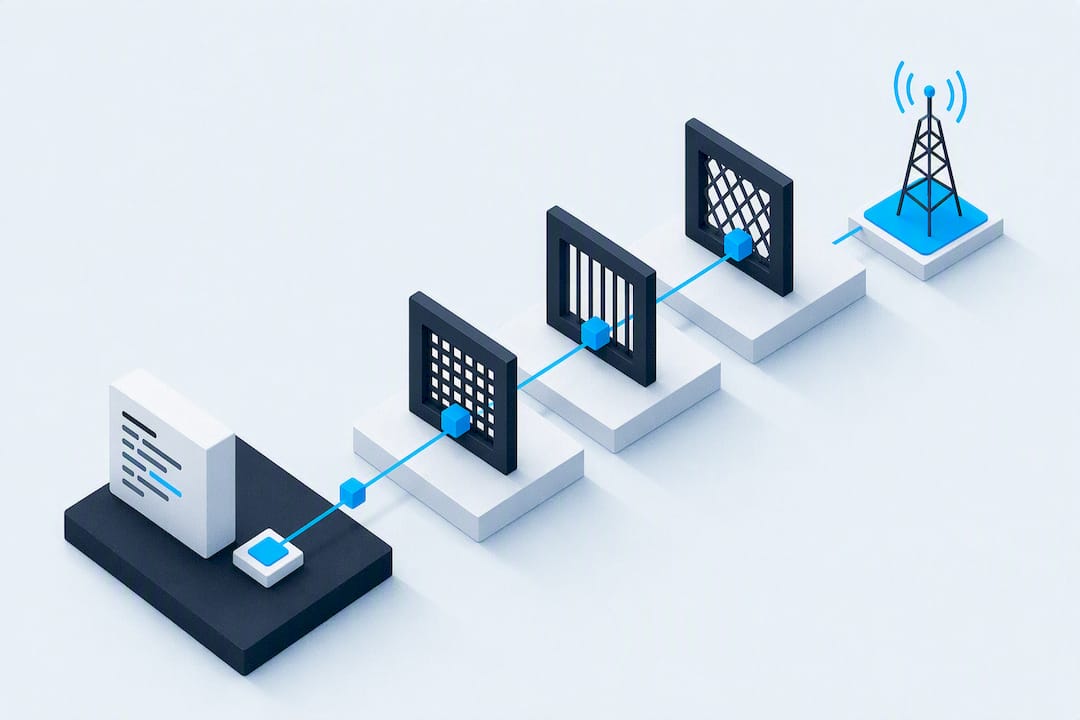
For reliable Python scraping, use rotating proxies (a gateway or a raw pool) paired with status-aware retries and a persistent session. Rotate on every request or on a sticky timer, treat 403 and 429 responses as rotation triggers rather than retry targets, and lean on requests for synchronous jobs, aiohttp for async, and Scrapy when you need a full spider pipeline. A gateway buys you operational simplicity; a raw pool buys you control.
TL;DR:
- Rotating proxies should be used on every request or at regular intervals to avoid detection and handle status codes like 403 and 429 properly.
- Datacenter proxies are cheap and fast but easily flagged; residential proxies are more resilient but higher cost; mobile proxies offer the highest trust for fingerprinting-heavy targets.
- For synchronous scraping, use
requestswith a session that includes retries, timeouts, and proxy rotation; for async, apply proxy per request withaiohttpand manage concurrency carefully.- Treat 403 and 429 responses as signals to immediately rotate to a new proxy rather than retrying the same one; monitor proxy success rates and latency continuously.
- Before deploying, benchmark proxies against your actual target site, focusing on latency and success rates, especially for mobile carrier IPs, to ensure operational effectiveness.
Table of Contents
- What Are the Main Proxy Types for Python Scraping?
- How Do I Add a Proxy to Python Requests?
- How Do You Use Proxies With aiohttp for Async Scraping?
- How Should Retries and Rotation Work in Production?
- What Should a Production Proxy Checklist Include?
- Quick Reference for Setup and Debugging
- When to Build a Proxy Pool vs Use a Gateway
- Try Masklabs for Your Python Scraping Stack
- Sources
- FAQ
What Are the Main Proxy Types for Python Scraping?
Every python scraping proxy decision starts with picking the right IP type, and that choice drives your detection rate, latency, and cost all at once.
Datacenter proxies come from cloud hosting ranges. They're fast and cheap, but their IP blocks are well documented, so sites with any real bot defense flag them fast. Use them for low-sensitivity targets: internal APIs, sites without aggressive fingerprinting, or bulk jobs where a percentage of failures is acceptable.
Residential proxies route through real home internet connections, which makes them look like ordinary consumer traffic. They cost more per gigabyte and tend to run slower than datacenter IPs, but they survive far longer against reputation-based blocking.
Mobile proxies use IP addresses assigned by cellular carriers. Carrier-grade NAT means thousands of real phones can share one IP, so blocking that address risks collateral damage a site operator doesn't want. That's why mobile IPs carry the highest trust score of the three, and why they're often the only workable option for scraping targets that fingerprint aggressively (social platforms, ad verification, ticketing sites).
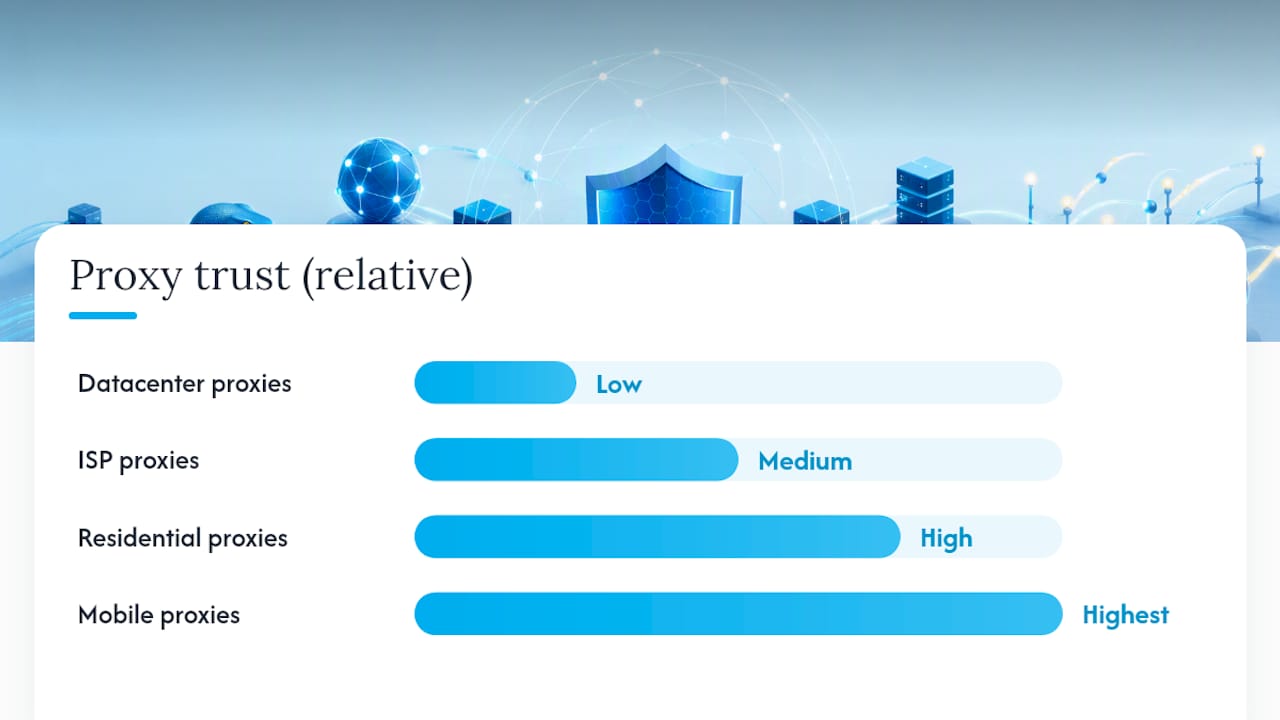
ISP proxies sit in between: datacenter speed with a residential-style registration, useful when you need low latency and a cleaner IP reputation than raw datacenter ranges.
On protocol, the trade-off is simpler:
- HTTP/HTTPS proxies work natively with
requestsand most HTTP clients with zero extra dependencies. - SOCKS5 proxies operate at a lower network layer, support any TCP traffic, and are often what mobile and residential providers expose.
- When using SOCKS5, use
socks5h://instead ofsocks5://. The trailinghforces DNS resolution through the proxy itself rather than your local resolver, which closes a real leak. Requests documentation confirms both the SOCKS proxy format and therequests[socks]extra needed to enable it.
How Do I Add a Proxy to Python Requests?
Wiring a proxy for web scraping into requests is straightforward, but three details trip up most developers: the proxies dict format, environment variable interaction, and how session.trust_env behaves.
The proxies dict maps a scheme to a proxy URL: {"http": "http://user:pass@host:port", "https": "http://user:pass@host:port"}. That's how requests proxy authentication usually gets handled, credentials embedded directly in the URL. requests also reads HTTP_PROXY and HTTPS_PROXY environment variables by default. If a teammate has those set globally, they'll silently override your session's proxy config unless you set session.trust_env = False.
Here's a reusable session builder that handles retries and backoff correctly:
- Build the session once, reuse it everywhere. Creating a new
Sessionper request throws away connection pooling and cookie persistence for no benefit. - Attach a
Retryobject to anHTTPAdapter. Mount it on bothhttp://andhttps://prefixes so retries apply to every request through that session. - Set
backoff_factor=1.0. This is the standard value recommended for couplingRetrywith arequests.Session, producing wait times that scale with each attempt rather than hammering the target immediately. One practical writeup on requests configuration walks through this exact pairing. - Set explicit timeouts, not defaults. A connect timeout around 10 seconds and a read timeout around 30 seconds keeps a single slow proxy from stalling your whole pipeline.
- Rotate proxies with
itertools.cycleorrandom.choiceacross a pool, or weight selection using a power-of-two-choices approach so no single proxy gets overloaded while others sit idle. A copy-paste rotation starter kit demonstrates a reusableRotatingProxySessionclass you can adapt directly.
For credentials, pull proxy usernames and passwords from environment variables or a secrets manager, never hardcode them in source. And when a response comes back 403 or 429, don't just retry against the same proxy. Rotate to a fresh IP first, then retry.
Pro Tip: Log the proxy identifier alongside every response status code from the start. When a proxy starts failing, you want a paper trail, not a guess.
How Do You Use Proxies With aiohttp for Async Scraping?
Async scraping multiplies your request volume, which means proxy mistakes multiply too. aiohttp handles proxies differently from requests, and the differences matter.
- Pass the proxy per request:
session.get(url, proxy="http://host:port")rather than binding it to the session globally. This lets you rotate proxies request by request without rebuilding yourClientSession. - For authenticated proxies, use
proxy_headersto set theProxy-Authorizationheader directly. The olderproxy_authparameter is deprecated in favor of this pattern, according to the aiohttp client documentation. aiohttp'strust_envbehavior differs fromrequests. Check your version's defaults explicitly rather than assuming environment variables behave the same way across both libraries.- HTTPS-over-HTTPS proxy tunnels sometimes need a custom
ssl.SSLContext. If you're seeing obscure TLS errors only through the proxy and not directly, this is usually why. - Use
asyncio.Semaphoreto cap concurrent requests. Fifty tasks hitting a target simultaneously through fifty different proxies still looks like a coordinated burst to some detection systems. - Apply the same status-aware logic as sync code: rotate immediately on 403 or 429, and reserve retries with backoff for 5xx errors and timeouts, which are genuinely transient rather than a block signal.
How Should Retries and Rotation Work in Production?
The single most common mistake in a python scraping proxy setup is treating every failure the same way. A 500 error and a 429 error need opposite responses.
Transient errors (connection timeouts, 502, 503, 504) mean the server or network hiccupped. Retry the same request, ideally through the same proxy, with exponential backoff: 2 ** attempt seconds, capped at some reasonable ceiling like 60 seconds.
Blocking signals (403, 429) mean the target has flagged your current IP. Retrying through that same proxy just wastes time and confirms to the target that the IP is worth blocking permanently. Rotate to a different proxy immediately, then retry the original request. A practical proxy guide for scraping frames this distinction as the core operational rule for any serious pipeline.
Sticky sessions versus per-request rotation depends on what you're scraping:
- Logins, shopping carts, and any multi-step flow that depends on server-side state need a sticky session, the same IP held for the duration of that flow.
- Stateless page scraping benefits from per-request rotation, since spreading requests across many IPs is what actually helps you survive rate limits at volume.
Monitoring closes the loop. Track success rate and average latency per proxy, and pull any proxy below a set success threshold out of rotation automatically rather than waiting for a human to notice. Providers that expose per-request rotation through a single endpoint remove a meaningful amount of this bookkeeping, since the rotation logic runs on their side instead of yours.
What Should a Production Proxy Checklist Include?
Before locking in a proxy for web scraping at any real volume, run it against a checklist that covers both the provider and the protocol layer.
- Uptime and success rate. Ask for real numbers, not marketing language. Some providers report roughly 99.9% uptime and a success rate above 99%, figures worth benchmarking against whatever you're currently running.
- Geolocation granularity. If your scraping task needs city-level targeting (local search results, region-locked pricing, geo-restricted content), confirm the provider actually offers per-city IPs rather than country-level buckets.
- Session type flexibility. You need both sticky sessions for stateful flows and rotating sessions for high-volume stateless scraping, ideally switchable per job.
- Protocol and language support. HTTP, HTTPS, and SOCKS5 coverage across your actual stack (Python, Node.js, whatever else your team runs) saves you from rebuilding proxy logic per language.
Mobile carrier IPs matter most on targets that fingerprint aggressively, because carrier-grade NAT means one IP represents thousands of real devices, making a block decision costly for the target site to make. Before committing to any provider, run a short benchmark: a few hundred requests against your actual target, measuring latency and success rate directly rather than trusting a sales page. Our own breakdown of bot detection signals scrapers must handle covers what triggers these blocks in the first place.
Pro Tip: Run your benchmark against the exact target site you plan to scrape, not a generic test page. Detection systems vary wildly between domains, and a proxy that sails through one site can get flagged instantly on another.
Quick Reference for Setup and Debugging
A minimal requests proxy call looks like requests.get(url, proxies={"https": proxy_url}, timeout=(10, 30)). For aiohttp, it's session.get(url, proxy=proxy_url, proxy_headers=auth_headers).
| Check | What to look for |
|---|---|
| Env vars | HTTP_PROXY/HTTPS_PROXY silently override session settings unless trust_env=False |
| Status codes | Log every response code per proxy, not just failures |
| Latency | Measure per-proxy response time to catch slow outliers early |
| Blocking | Rotate immediately on 403/429; never retry the same IP |
When to Build a Proxy Pool vs Use a Gateway
Building your own pool makes sense once you have the engineering hours to manage rotation logic, monitor per-proxy health, and handle supplier failover in house. Below that scale, a gateway that abstracts rotation behind one endpoint gets you shipping faster with fewer edge cases to debug. Either way, run a small real test against your actual target before committing. A proxy that performs well on a generic benchmark can still fail against the one site you actually care about.
— Jon
Try Masklabs for Your Python Scraping Stack
Masklabs runs on real carrier IP addresses instead of datacenter ranges, which is the difference that matters once your scraping targets start fingerprinting traffic. Because each IP looks like an ordinary phone on a cellular network, requests come through as authentic instead of getting flagged as bulk automation.
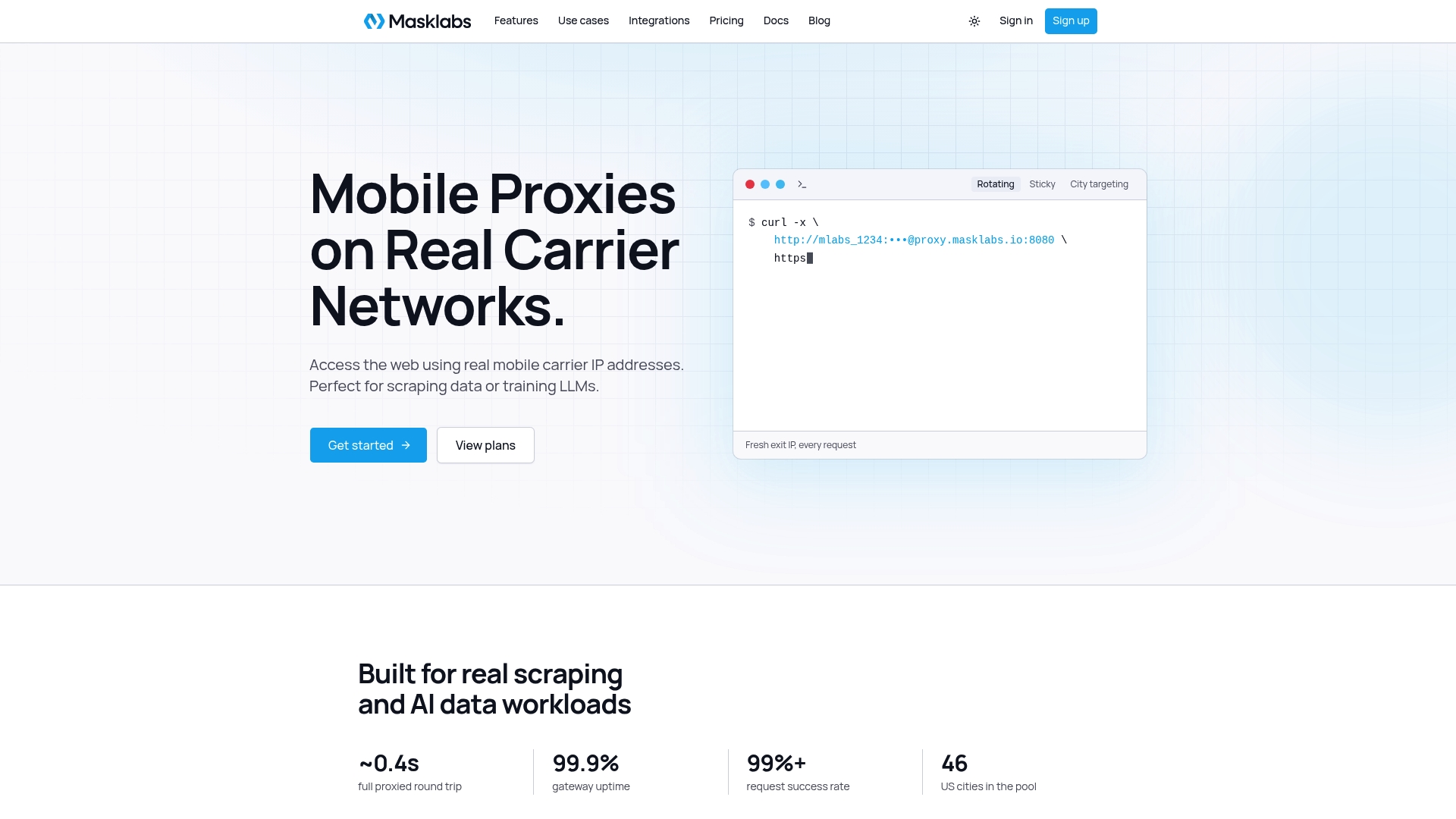
That authenticity backs real numbers: Masklabs reports high uptime and a high success rate, figures worth benchmarking against whatever you're currently running, with sticky or rotating sessions available depending on whether your job needs a persistent identity or fresh IPs per request. Geolocation targeting across many US locations can be important for tasks tied to specific markets, and integration support covering HTTP, HTTPS, and SOCKS5 across common programming environments is beneficial.
Run your own benchmark before switching anything in production. Pull a small crawl against your actual target, measure per-proxy latency and success rate, then tune concurrency and rotation from there. Start with a free trial on the Masklabs landing page and compare the numbers directly against whatever proxy for web scraping you're running today.
Sources
- Python Requests proxies, auth, timeouts, retries
- Rotating proxies with Python Requests: A copy-paste starter kit
- Requests — Advanced usage
- aiohttp client advanced
- A practical guide to proxies for web scraping (with Python examples)
FAQ
What Is the Best Python Library for Using Proxies?
requests handles most synchronous scraping needs with its proxies dict and Session objects, while aiohttp is the better fit for high-concurrency async jobs that need per-request proxy control.
Should I Rotate Proxies on Every Request?
Rotate per request for stateless page scraping to maximize survival under rate limits, but use sticky sessions for logins, carts, or any flow that depends on server-side state.
How Do I Fix a 403 or 429 Error With Proxies?
Treat both as blocking signals, not transient errors: rotate to a fresh proxy immediately rather than retrying the same IP, then retry the original request through the new address.
Do I Need SOCKS5 or HTTP Proxies for Scraping?
HTTP/HTTPS proxies work natively with most Python HTTP clients, while SOCKS5 is often required for mobile and residential proxy providers and needs socks5h:// to avoid local DNS leaks.
Why Do Mobile Proxies Work Better for Hard-to-Scrape Sites?
Carrier-grade NAT means one mobile IP represents thousands of real devices, so blocking it risks blocking legitimate users too, which is why mobile IPs like those Masklabs provides tend to survive aggressive fingerprinting longer than datacenter or residential alternatives.