Cut Proxy Bandwidth 50 to 90%: 4 Developer Fixes That Map to Billing

The fastest savings come from four moves: block images, fonts, and media before they hit the wire; prefer HEAD requests, API endpoints, or compressed responses over full page loads; cache and dedupe repeated runs; and match your proxy type to the job instead of defaulting to the most expensive pool. Combined, these changes typically cut proxy bandwidth by 50 to 90 percent in common scraping workflows.
TL;DR:
- Blocking image, font, and media requests at the HTTP level can cut proxy bandwidth by up to 90 percent in scraping workflows.
- Using HEAD requests, compression, caching, and deduplication can reduce total data transfer and save costs across repeated runs.
- Matching proxy type to the task, such as datacenter for bulk work or mobile for fingerprint-sensitive targets, prevents overspending on unnecessary premium proxies.
- Monitoring key metrics like bytes transferred and request failures allows early detection of spikes that could lead to increased bills.
- Reusing connections and rotating sessions instead of sticky sessions lowers session duration costs, especially on mobile proxies with high per-GB prices.
Table of Contents
- Quick wins you can apply today
- Implementing Playwright and Puppeteer interception
- HTTP-level tricks that cut bytes before they're billed
- Matching proxy type to the job and provider billing
- Cutting session duration and connection costs
- Catching spikes before they hit your invoice
- Caching and deduplication that compound over time
- When carrier IPs cut wasted retries
- Optimize code first, or pay for reliability?
- Try mobile proxies designed for lower retry overhead
- FAQ
- Sources
Quick wins you can apply today
Most teams can shave significant bandwidth within an hour by auditing what their crawler actually downloads versus what it needs. Headless browsers in particular tend to fetch everything a human browser would, including assets that never touch your extraction logic.
- Block image, font, and media resource types at the request level in your HTTP client or browser automation tool.
- Bypass the proxy entirely for known CDN hostnames and static asset domains when the content doesn't require proxy routing, which reduces proxy bandwidth while preserving page rendering.
- Set
Accept-Encoding: br, gzipon every request and confirm your proxy gateway passes the compressed response through rather than re-inflating it. - Cache responses for pages that rarely change, and dedupe requests within a single run so you never download the same URL twice.
Pro Tip: Run a test crawl with resource blocking off, then on, and compare the bytes transferred in your proxy dashboard. The delta tells you exactly how much you were paying for assets you never used.
Implementing Playwright and Puppeteer interception
Browser automation is where bandwidth waste piles up fastest, since a single page load can trigger dozens of subrequests for scripts, stylesheets, and tracking pixels you'll never parse. Playwright and Puppeteer both expose routing APIs that let you intercept every outgoing request before it reaches the proxy.
- Register a route handler on the page or context and inspect
resourceType()for each request. - Call
route.abort()forimage,font, andmediatypes, and letdocumentandxhrrequests through since those usually carry the data you need. - Use
route.continue()for requests you want to modify and pass through, androute.fallback()when you want a later handler in the chain to decide, following the semantics documented in Playwright's routing API. - Reserve full headless rendering for pages that require JavaScript execution or screenshots, since a plain HTTP client is cheaper for everything else.
- When a target frequently fails without a browser, try a direct request first and only retry through a headless instance (and proxy) on failure, rather than running every job through the expensive path by default.
Handler order matters: an abort() call earlier in the chain always wins, so audit your handlers if resources you expect to block are still downloading.
HTTP-level tricks that cut bytes before they're billed
Below the browser layer, the request itself carries a lot of avoidable weight. Small header and verb changes often save more than people expect, because they apply to every single request in a run.
- Set
Accept-Encoding: br, gzipand verify the response headers show the content actually arrived compressed, since some proxy gateways silently strip this. - Use
HEADrequests for existence or status checks instead of a fullGET, and use conditionalGETrequests withIf-Modified-SinceorETagheaders for content that rarely changes. - Avoid following automatic redirect chains blindly. Inspect the
Locationheader first when you only need the final URL, not the intermediate bodies. - Strip or ignore response parts you don't parse, such as embedded base64 images in JSON payloads, before they count against your transfer total.
A quick compression check: request the same URL once with Accept-Encoding: identity and once with Accept-Encoding: br, gzip, then compare the Content-Length of each response through your proxy dashboard. A large gap confirms compression is working end to end, and practical optimization passes built around this kind of check routinely cut 50 to 90 percent of wasted traffic.
Matching proxy type to the job and provider billing
Not every target needs the most expensive pool available. Datacenter IPs work fine for bulk, low-sensitivity checks; residential IPs suit flows that need more trust; mobile or carrier IPs earn their premium on targets that aggressively fingerprint and block. Provider billing usually tracks more than raw bandwidth, so the optimization that saves the most money depends on which meter your provider actually charges against.
- Bandwidth (GB transferred) rewards everything in the Quick Wins and HTTP sections above.
- Successful requests reward caching and dedupe, since a cache hit never counts as a billed request.
- Concurrency and session duration reward connection reuse and shorter-lived sessions, covered next.
| Proxy type | Typical cost | Best use case |
|---|---|---|
| Datacenter | $0.3 to $0.6 per GB | Bulk, low-sensitivity checks |
| Residential | $1 to $6 per GB | Flows needing higher trust |
| Mobile | $10+ per GB | Endpoints that need carrier IPs |
A multiplexed setup, cheap pools for bulk work and premium pools only where a target demands it, often halves overall spend without hurting success rate.
Cutting session duration and connection costs
Sticky sessions keep one IP pinned for a window of time, which helps on flows that require a consistent identity across steps, like a login or a multi-page checkout. The trade-off is that a sticky session can run up billed duration even when your crawler is idle between requests, so reserve it for jobs that actually need continuity and rotate for everything else.
- Reuse connections and enable keepalive to cut the overhead of renegotiating TLS on every request.
- Default to rotating sessions for independent, stateless requests, and switch to sticky only when a workflow depends on IP continuity.
- Create separate credentials or sub-users per project so one runaway job doesn't eat another team's data quota.
Pro Tip: If a job doesn't need to maintain a session across steps, rotating sessions almost always come out cheaper than sticky, since you're never paying for idle pinned time.
Catching spikes before they hit your invoice
A single retry loop or a site redesign that breaks your selectors can burn through a data allotment in minutes. Monitoring catches this before it shows up as an unpleasant invoice line.
- Track bytes transferred per hour, requests per hour, success rate, and error rate as your core metrics.
- Set alert thresholds based on your normal baseline, for example flagging more than 5 GB transferred in a single hour or a success rate that drops below 80%.
- Push these metrics to Prometheus and visualize them in Grafana, or route them through your cloud provider's existing alerting pipeline.
Catching a loop within the first hour instead of the first day is often the difference between a minor blip and a bill you have to explain.
Caching and deduplication that compound over time
Caching delivers the largest long-term savings because every cache hit is a download you never pay for again. Use a CDN or local cache layer for category pages, listing pages, and other assets that change infrequently, and apply the same logic inside your own crawler.
- Normalize query strings and build a canonical fingerprint per URL so tracking parameters don't create false duplicates.
- Set TTLs based on how often the underlying content actually changes, and use stale-while-revalidate so a cache refresh never blocks the current request.
- Cache repeated screenshots or renders directly, since a cache hit skips the browser render and the proxied download entirely.
When carrier IPs cut wasted retries
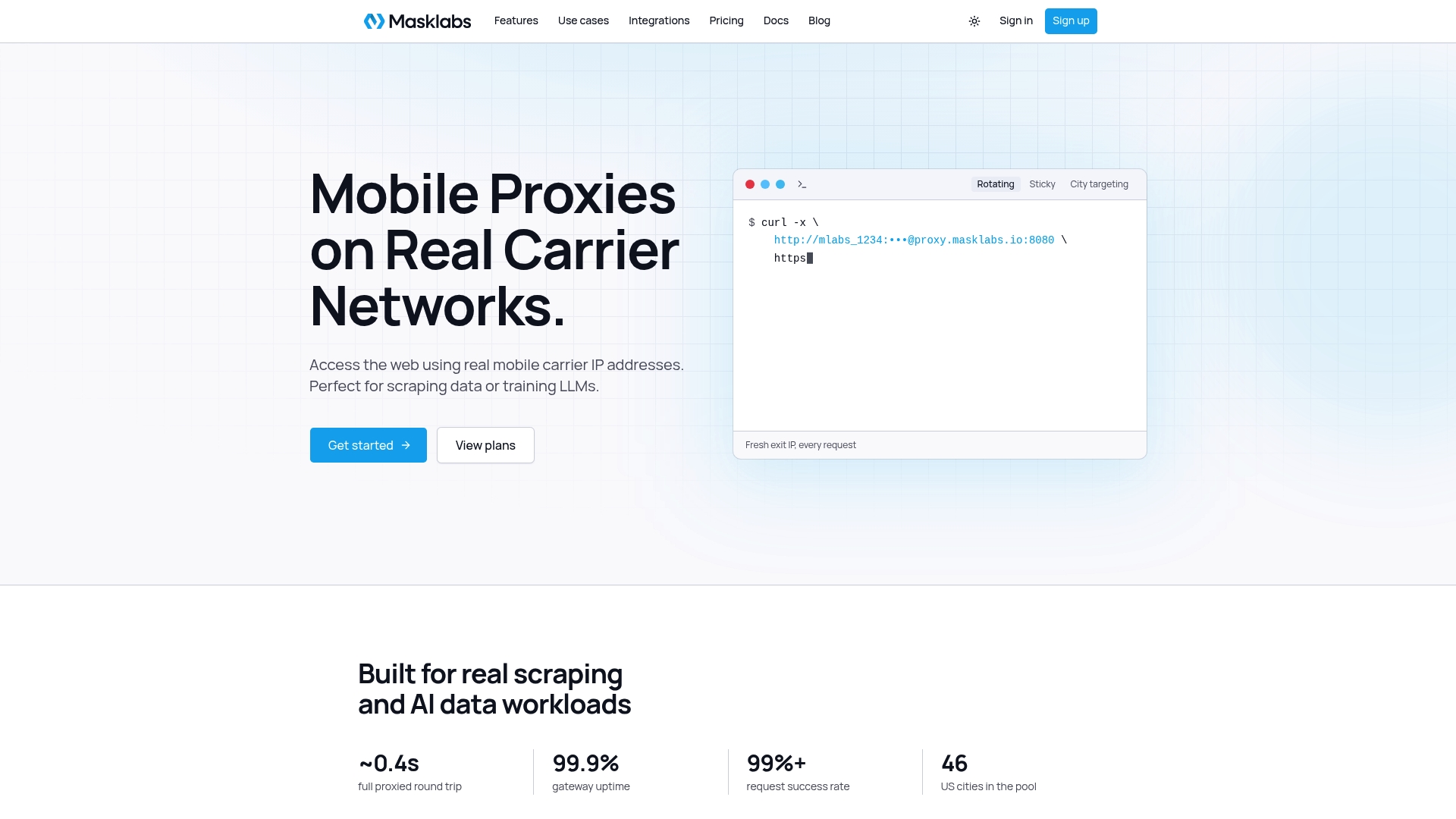
Blocking and backoff overhead often costs more bandwidth than the original request. Mobile carrier IPs, the kind we provide across 46 US cities with sticky or rotating sessions, tend to pass fingerprint checks on the first attempt rather than the third, and our US mobile proxies report roughly 99.9% uptime and a success rate above 99%. Fewer retries mean fewer bytes spent re-fetching the same page.

Optimize code first, or pay for reliability?
Optimization has diminishing returns. Aggressive blocking also carries risk: strip too much and you lose data quality along with the bytes.
— Jon
Try mobile proxies designed for lower retry overhead
We built our session management guide to help you pair the right sticky or rotating setup with your workload, and every plan includes API access across HTTP, HTTPS, and SOCKS5.
Check our pricing page to compare the Starter, Basic, Advanced, and Scale plans, starting at $30.00 per month, and start a trial today.
FAQ
How do I decrease proxy bandwidth usage?
Block nonessential resource types like images, fonts, and media, prefer compressed responses and HEAD requests over full page loads, and cache repeated requests. Together these changes commonly cut proxy bandwidth by 50 to 90 percent in scraping workflows.
Is it better to leave a proxy on or off?
It depends on the target: bypassing the proxy for static CDN hosts and assets that don't need it saves bandwidth while preserving rendering, while targets that block or fingerprint aggressively still need the proxy on. Route proxy traffic only to the hosts that actually require it.
How can I reduce my overall bandwidth usage?
Start by blocking resource types you don't parse, enabling compression, and caching anything that doesn't change often. These same tactics apply directly to proxy traffic since every byte skipped is a byte you don't pay for.
How do I see what's consuming my bandwidth?
Track bytes transferred per hour alongside request counts and success rates, and push those metrics to a dashboard like Prometheus and Grafana. A sudden spike usually points to a retry loop or a site change that broke your selectors.
Does switching proxy type reduce bandwidth costs?
Matching proxy type to the job rather than defaulting to the most expensive pool controls cost per byte rather than total bytes. Datacenter proxies run $0.3 to $0.6 per GB, residential run $1 to $6 per GB, and mobile proxies like ours run $10 or more per GB, which is why mixing pools by task matters.